In the high-stakes environment of American higher education, the “hustle culture” is often glorified. From the ivy-covered halls of the East Coast to the tech-driven campuses of the West, US students are facing an unprecedented surge in academic pressure. However, the cost of a high GPA isn’t just measured in late-night library sessions; it is increasingly being paid for with physical health.
Recent data from the Healthy Minds Study (2025) reveals that while some mental health symptoms are stabilizing, “flourishing”—a measure of overall well-being and optimism—remains low at just 36% among college students. The physiological toll of this sustained pressure is more than just a temporary “final’s week slump”; it is a systemic health crisis.
The Science of Stress: How Your Brain Affects Your Body
When a student faces a daunting deadline or a complex research paper, the body’s “fight or flight” system kicks in. The hypothalamus signals the adrenal glands to release a surge of hormones, including adrenaline and cortisol. While this is helpful for escaping a predator, it is damaging when “active” for weeks on end during a semester.
The Cortisol Cascade
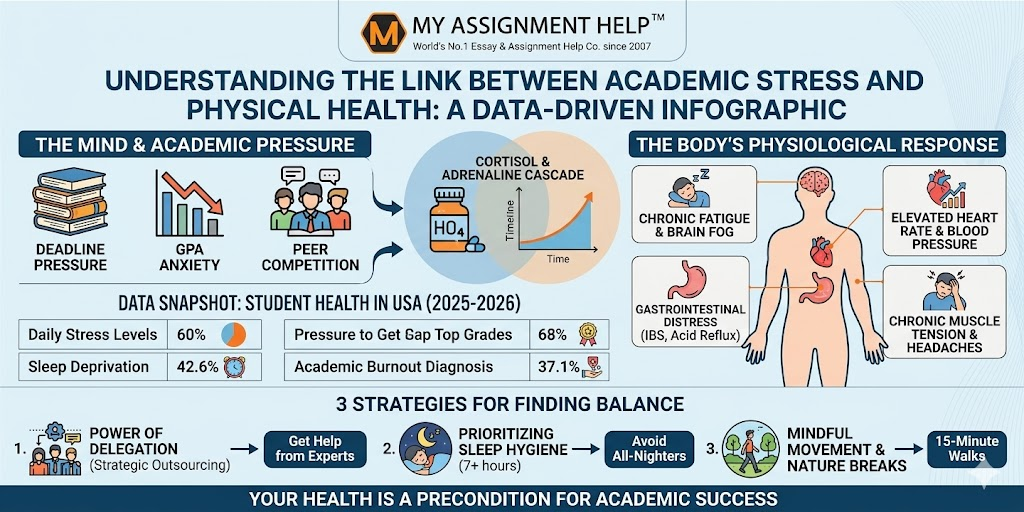
Prolonged exposure to cortisol—the primary stress hormone—does more than just cause anxiety. In the academic context, it leads to:
- Weakened Immune Response: Research shows that students are significantly more likely to contract viral infections during exam periods because stress suppresses T-cell production.
- Gastrointestinal Distress: Often dismissed as “nervous stomach,” chronic academic stress is a leading contributor to IBS flare-ups and acid reflux among young adults.
- Cardiovascular Strain: Sustained high heart rates and blood pressure during periods of heavy workload can lead to long-term heart health concerns.
If you find yourself physically collapsing under the weight of your curriculum, it’s a sign that your body can no longer sustain the pace. To mitigate these risks, many students choose to do my assignment for me by MyAssignmentHelp as a strategic way to reduce their physiological load and protect their long-term wellness.
Data Snapshot: Student Health in the USA (2025-2026)
According to the latest Research.com reports, the academic landscape is becoming increasingly difficult to navigate without professional intervention. These numbers highlight a dangerous trend: students are sacrificing sleep and physical recovery to meet academic standards. This exhaustion often results in a “brain fog” that makes writing complex papers even harder. In such cases, finding a reliable way to buy term paper can be the difference between a health crisis and a successful semester.
| Metric | Percentage of US Students Affected |
| Daily Stress Levels | 60% |
| Sleep Deprivation (< 7 hours) | 42.6% |
| Pressure to Get Top Grades | 68% |
| Academic Burnout Diagnosis | 37.1% |
These numbers highlight a dangerous trend: students are sacrificing sleep and physical recovery to meet academic standards. This exhaustion often results in a “brain fog” that makes writing complex papers even harder.
Strategies for Finding “The Middle Ground”
Achieving academic excellence doesn’t have to mean sacrificing your health. Here are three data-backed strategies to find balance:
1. The “Power of Delegation”
In the professional world, senior executives delegate tasks to focus on high-level strategy. Students should adopt the same mindset. If a specific term paper is causing physical illness, outsourcing the draft phase is a sensible management tactic.
2. Prioritizing Sleep Hygiene
The American Psychological Association (APA) notes that sleep is the first thing students sacrifice, yet it is the most critical for memory consolidation. Aim for at least 7 hours. If you can’t hit that because of a workload, it’s time to seek academic support.
3. Mindful Movement
Even 15 minutes of “softly fascinating” nature exposure (like a walk in a campus park) can reset the brain’s attention span, according to recent studies by the University of Michigan.
Key Takeaways for US Students
- Listen to the “Check Engine” Light: Physical symptoms like headaches and stomach pain are early warnings of academic burnout.
- Stress is Physiological: It is not “all in your head”; it is a chemical reaction affecting your heart, gut, and immune system.
- Strategic Outsourcing: Utilizing services like MyAssignmentHelp is a legitimate time-management strategy used by thousands of students to maintain their health.
Frequently Asked Questions (FAQ)
Q: Can academic stress cause permanent health damage?
Chronic stress that goes unmanaged can contribute to long-term issues like hypertension, weakened immunity, and clinical anxiety disorders.
Q: How do I know if I’m burnt out or just tired?
Fatigue is cured by sleep; burnout is characterized by emotional exhaustion, a lack of motivation, and physical symptoms that don’t go away after a weekend of rest.
Q: Is it ethical to use an assignment service for health reasons?
Balancing your health and academics is a personal responsibility. Many students use these services for research assistance and drafting to ensure they don’t compromise their physical well-being.
Author Bio
Mark Sullivan is a Senior Academic Consultant at MyAssignmentHelp with over 10 years of experience in content strategy and student wellness advocacy. Holding an M.Ed. from a leading US university, Mark focuses on helping students navigate the complexities of modern education through E-E-A-T (Experience, Expertise, Authoritativeness, and Trustworthiness) principles. He is a frequent contributor to journals regarding student mental health and academic integrity.
References & Sources
- Healthy Minds Study (2025). “College student mental health: Third consecutive year of improvement.” University of Michigan.
- Research.com (2026). “50 Current Student Stress Statistics: Data, Analysis & Predictions.”
- American Psychological Association (2025). “Students Experiencing Stress: A Clinical Overview.”
- Frontiers in Psychology (2025). “The relationship between stress and academic burnout in college students.”